


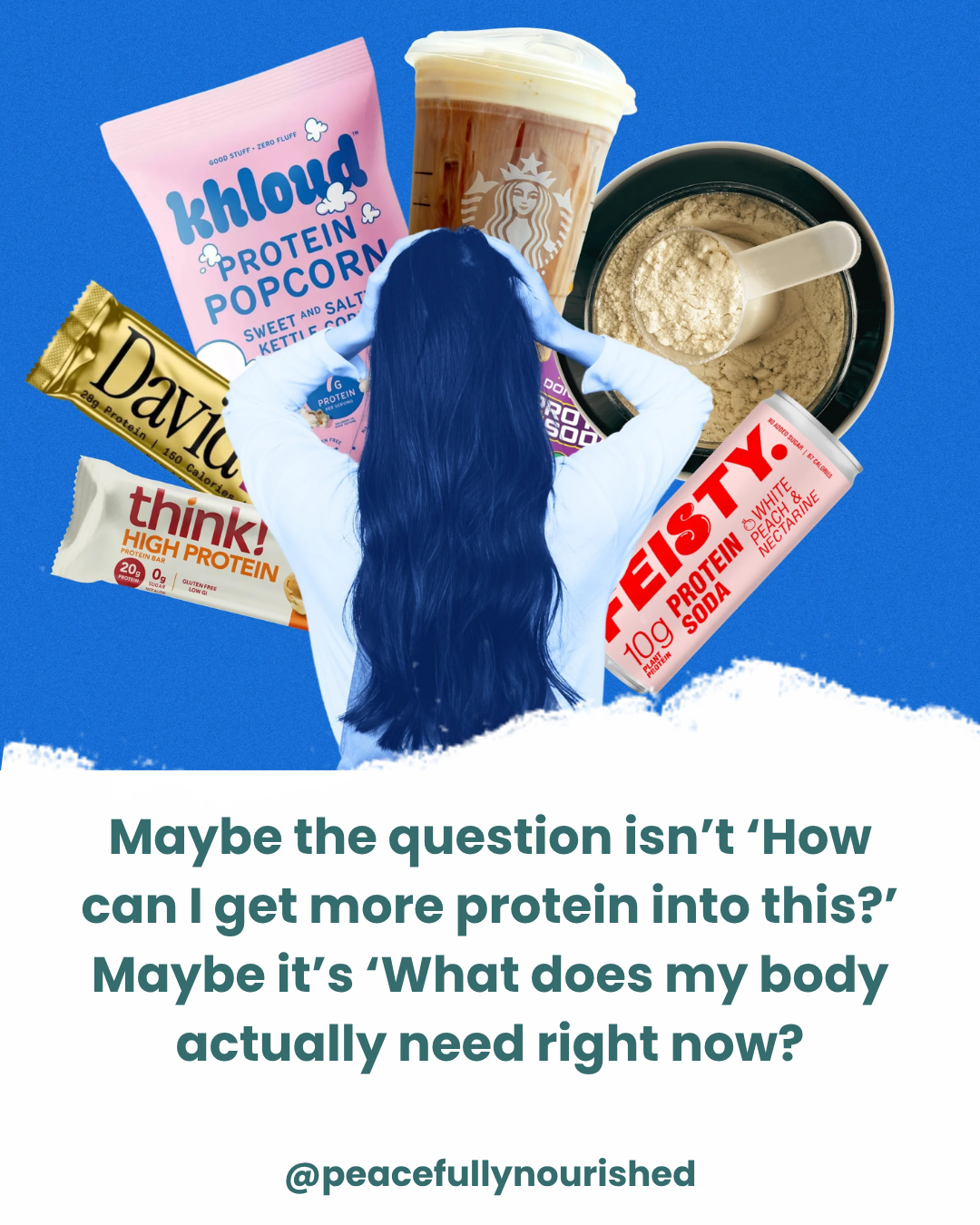
Have you ever heard of an Espresso Proteini? Apparently, even an espresso martini suffers from a protein deficiency nowadays. This creation by the chain restaurant Buffalo Wild Wings is made with espresso, vodka, buffalo dry rub and 10 grams of protein, and it definitely is a clear sign that society’s fixation on protein has officially gone too far.
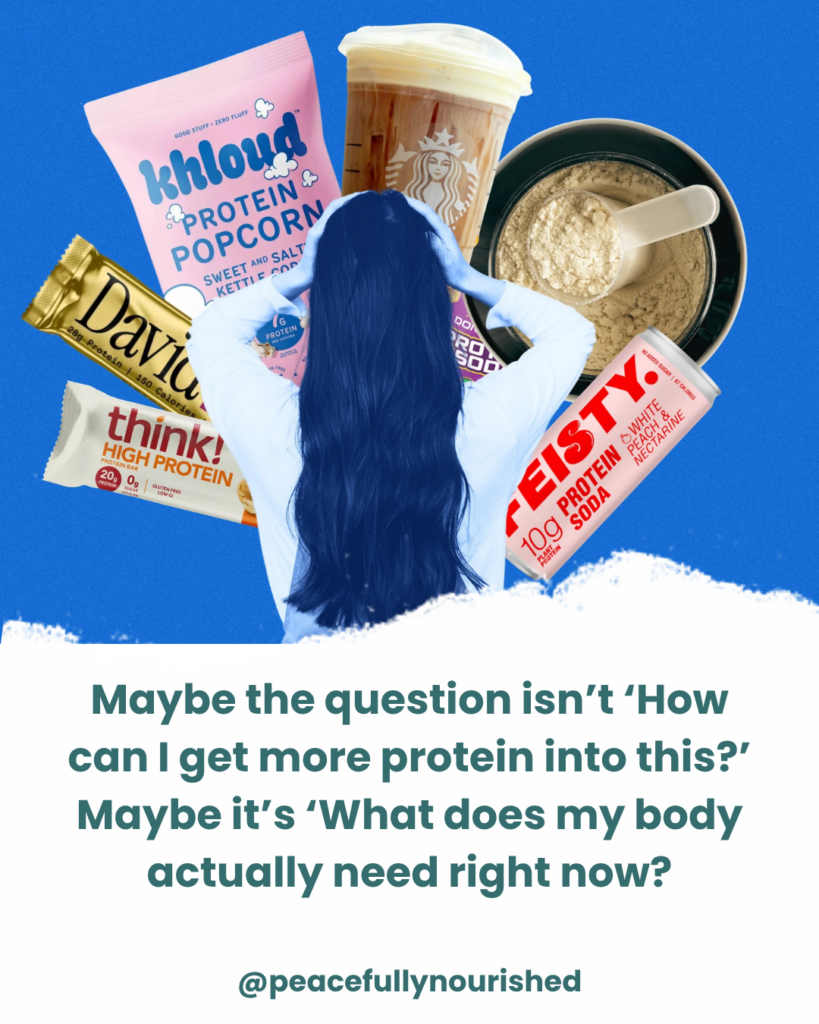
Protein coffee. Protein cereal. Protein popcorn. Protein water. We are living through an era in which almost every food is being marketed around a single nutrient. The worst thing is that while protein is shown and advertised all over our grocery aisles and social-media feeds, carbohydrates, fiber, healthy fats and overall energy intake are being pushed out of sight.
First, protein is not the enemy, it is essential for our survival. It provides amino acids that the body uses to build and repair tissues and support enzymes, hormones, immune function and many other processes. Some people also genuinely have higher protein needs. This can include athletes, older adults, people recovering from illness or injury, and individuals intentionally trying to build or preserve muscle.
The problem is not that people are eating protein.
The problem is the idea that every person needs to maximize it, every meal needs to revolve around it and every product becomes healthier just because the word protein is plastered all over the packaging. According to National health data from Statistics Canada (2017), we were already consuming adequate protein while consistently falling short on foods rich in fiber, with almost 100% of Canadian adults already meeting or exceeding baseline protein requirements.
So while protein receives its own product aisle, fiber is barely taken into account. Women are generally advised to consume approximately 25 grams of fiber per day, yet average intake in Canada is much lower. Fiber supports digestive health, regular bowel movements, blood-sugar management and heart health, while also helping nourish the gut microbiome.
A protein bar may advertise 20 grams of protein on the front while containing very little fiber. On the other hand, a bowl made with lentils, quinoa, vegetables and seeds gives us protein alongside carbohydrates, fiber, healthy fats and a variety of micronutrients.
The question that people should be asking is, “What else does this food give me?”. Instead of only, “How much protein does this contain?”.
Tune into this week’s podcast about Protein-Mania episode #97 Protein Mania: When Diet Culture Gets a Wellness Rebrand
Diet culture has found its newest way in
Over the years we have seen that diet culture is very good at reinventing itself. It may no longer tell us to eat as little as possible. Now, it is convincing us that every bite needs to do more. A regular snack suddenly seems inadequate unless it has 20 grams of protein. A coffee cannot simply provide caffeine and enjoyment, it apparently needs the “perfect” macros.
Protein fits perfectly into this new version of diet culture because it sounds scientific. It can be measured, displayed on packaging and turned into a daily target. It is also associated with fitness, fullness and muscle, allowing companies to promote almost any product as performance-enhancing.
But adding protein does not automatically turn a product into a balanced meal. And eating more protein does not automatically result in more muscle. Building muscle also requires appropriate strength training, enough overall food and energy, carbohydrates to support activity, and proper recovery.
You cannot protein-powder your way out of chronic under-fuelling.
What happened to carbohydrates?
Carbohydrates have spent years being treated as something we need to earn, burn or avoid.
But carbohydrates are not a dietary mistake. They are the body’s primary and preferred first source of energy and are especially important for supporting the brain and for moderate to high-intensity physical activity.
A meal can contain 35 grams of protein and still leave someone exhausted an hour later because it did not provide enough total food or carbohydrates. Protein can give us energy, but using protein primarily as fuel is not the same as supplying the body with the carbohydrates it can use efficiently during demanding activity. Sometimes what feels like a need for more protein is actually a need for more energy.
This is especially relevant when someone replaces toast, fruit, grains or starchy vegetables with low-carbohydrate protein products and then wonders why workouts feel harder and heavier, concentration is poor or energy levels crash.
Healthy fats did not stop being important
Fat has also been pushed aside by the protein obsession, or treated as something that is only acceptable when it appears within a high-protein label.
Dietary fat provides energy, supplies essential fatty acids and helps the body absorb the fat-soluble vitamins A, D, E and K. Foods such as nuts, seeds, avocado, olive oil, fatty fish and soy products provide mostly unsaturated fats that can be part of a balanced eating pattern.
A meal with lean protein and vegetables may look extremely “healthy” online, but without enough carbohydrates, fats or total energy, it may not actually meet someone’s needs. This especially matters for women, who are frequently exposed to contradictory advice. They have been told all their lives to eat less, avoid carbohydrates, stay lean and now to reach an aggressive protein target somehow.
But it is important to note that someone can hit her protein goal every day and still be under-fuelled. Among active women, continuous low energy availability can negatively affect health and performance, including menstrual and bone health. The solution is not necessarily another protein shake. It may be eating more total food and restoring the carbohydrates and fats that have been unnecessarily removed.
Can you eat too much protein?
There is no single amount that becomes “too much” for every healthy person, and an official tolerable upper intake level has not been established for protein. However, the absence of an upper limit does not prove that unlimited intake is beneficial, it can also mean that there is not enough evidence to establish one precise threshold.
Once someone’s needs are met, additional protein does not guarantee additional muscle. At a practical level, an excessive focus on protein can crowd out carbohydrates, fiber-rich foods, healthy fats and overall variety.
Medical history matters too. People with chronic kidney disease may need their protein intake adjusted based on kidney function and treatment, making generic high-protein advice inadequate. We have to remember that more is not automatically better for everyone. More is simply more.
This is where working with a registered dietitian helps
An RD can consider someone’s health history, medications, activity level, kidney function, diabetes management, digestive symptoms, allergies, cooking skills, financial situation, culture, schedule and relationship with food. They can determine whether increasing protein is genuinely useful, or whether the person actually needs more carbohydrates, fiber, fats, total energy or simply more variety.
They can also help someone move away from strict targets and create an eating pattern that works in real life. Because a recommendation that ignores someone’s access to food, ability to cook, mental health or medical needs is not truly individualized care.
Maybe food does not need to work this hard
Protein is important. But somewhere along the way, “getting enough protein” seems to have turned into “getting as much protein as possible.”
Those are not the same thing.
Nutrition is not a competition to see how many grams of one nutrient we can squeeze into a day. Carbohydrates have a job. Fats have a job. Fiber has a job. Vitamins and minerals have jobs.
And food also has roles that will never appear on a nutrition label: culture, convenience, comfort, enjoyment and connection.
So maybe the better question is not always:
“How can I get more protein into this?”
Maybe it is:
“What does my body actually need from this meal or snack?”
Sometimes the answer will be protein. Sometimes it will be carbohydrates before a workout, more food after a long day, some fat to make a meal more satisfying, or fiber that has been missing throughout the day. And sometimes the answer will just be “this sounds good”. That counts too.
The goal is not to go from a protein obsession to avoiding protein. It is to take protein as one important part of nutrition, rather than the standard by which every food has to prove its worth.
Because your coffee does not need 20 grams of protein to be worthy of drinking. Your snack does not need perfect macros to be worthy of eating. And despite what Buffalo Wild Wings may have us believe, an espresso martini probably never had a protein deficiency in the first place.
Where to go from here
- If you find yourself overthinking every snack:
Read Snacking: How to Feel More Nourished Throughout the Day for a more flexible way to think about carbohydrates, protein, fat, satisfaction and what actually keeps you going between meals. - If protein is taking over your post-workout routine:
Read A Non-Diet Take on Sports Recovery Snacks to learn why recovery is about more than just protein, and how simple, everyday foods can support your body after movement. - If you are tired of foods being labelled “good,” “bad,” “healthy” or “unhealthy”:
Read Understanding Food Neutrality: A Kinder Way to Think About Food for a more balanced approach to nutrition that makes room for both health and enjoyment. - Or if you are feeling in a cooking mood:
Try our Summer Garden Hummus with pita or crackers, a snack that happens to bring carbohydrates, fats, fiber and protein together without needing to advertise itself as a protein hack.


leave a comment
share
share
share
share
share